
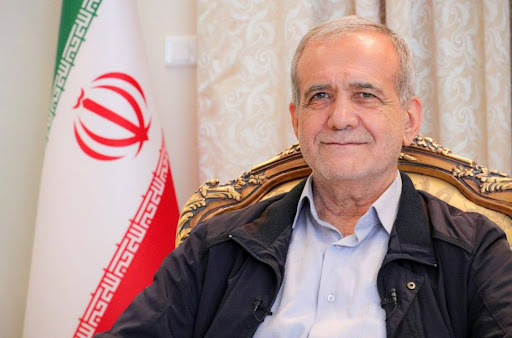
Iranian President Masoud Pezeshkian has drawn a clear line for Gulf states, stating that countries that host enemy military operations will lose their security as a direct consequence. His post on X came over a month into the Iran-US conflict and was directed explicitly at the governments of the Gulf region. Pezeshkian framed the issue as a straightforward choice with real and immediate consequences.
Gulf nations including Saudi Arabia, the UAE, Oman, Kuwait, and Qatar have been drawn into the war through US military infrastructure that has been used to strike Iran. Tehran has retaliated with strikes inside those countries, forcing Gulf governments into the position of managing an active war on their territory. The situation has created political and security challenges that these governments are struggling to address.
Pezeshkian reaffirmed that Iran does not engage in preemptive military action and only retaliates when its economic or infrastructure targets are attacked. He warned Gulf governments that the line between host and participant has already been crossed, and that continued hosting of enemy operations will continue to invite retaliation. His message is an ultimatum wrapped in the language of regional self-interest.
Pakistan has positioned itself as the leading diplomatic actor in the search for a resolution. Prime Minister Shehbaz Sharif confirmed that Pezeshkian told him trust must be the foundation of any peace process. Pakistan’s foreign ministry has organized a multilateral meeting in Islamabad with the foreign ministers of Saudi Arabia, Egypt, and Turkey to discuss de-escalation pathways.
Pakistan’s Ishaq Dar will lead the discussions and arrange meetings with Prime Minister Sharif. Iran has praised Pakistan’s honest and constructive mediation and remains open to dialogue under the right conditions. The upcoming Islamabad talks offer the best chance yet for the region to chart a course toward peace.