
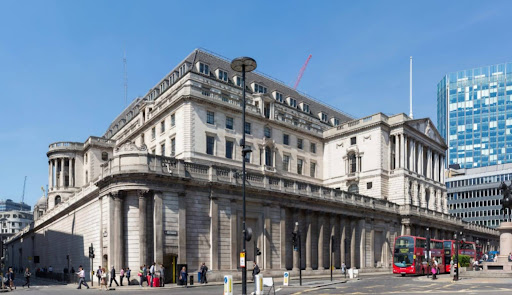
Behind the Bank of England’s unanimous decision to hold rates at 3.75% lies a deeply uncertain and increasingly hawkish policy environment shaped by war, energy market turmoil, and shifting committee opinion. While the decision itself was expected, the tone from Threadneedle Street was notably more cautious than in previous months. Officials made clear that the luxury of gradual rate cuts had been disrupted by a conflict few had anticipated.
The US-Israel military campaign against Iran has had an immediate and significant impact on global energy markets, with oil and gas prices surging in the weeks since hostilities began. This has threatened to derail the UK’s inflation trajectory at a critical moment, just as the country was approaching its 2% target. The Bank now expects inflation to climb back above 3% and remain stubbornly elevated well into next year.
Andrew Bailey used his post-decision communications to walk a careful line — acknowledging the real inflation threat while resisting market speculation about imminent rate hikes. He said the Bank was in “assessment mode,” watching how the conflict and its economic consequences unfold. His key message was that the Bank remained on hold, not on a predetermined hiking path.
Despite that caution, the committee’s internal debate has clearly shifted. Members who previously favoured rate cuts, including deputy governors Sarah Breeden and Dave Ramsden, acknowledged the war had changed their calculus. Even the reliably dovish Swati Dhingra indicated openness to higher rates if inflation proved persistent.
The broader economic context adds to the challenge. Wage growth slowed sharply in the latest data, and unemployment has risen to its highest level since 2020. These indicators would normally argue for looser monetary policy — but with inflation at risk of reacceleration, the Bank finds itself with very limited room to manoeuvre.