
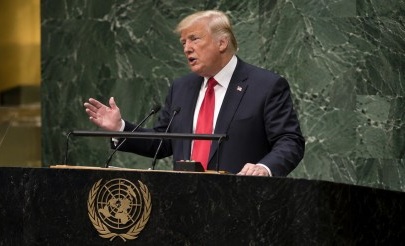
As artificial intelligence (AI) continues to evolve and reshape global economies, discussions around its regulation and terminology are heating up. In this context, former U.S. President Donald Trump has stirred debate by suggesting a rebranding of AI as “super intelligence” during a speech at the United Nations General Assembly in New York. Trump’s proposal aims to better reflect the capabilities of the technology, moving away from what he perceives as the diminishing connotation of the word “artificial.”
Trump’s remarks come amid ongoing international discourse on how to manage the rapid advancements in AI technology. While some political leaders advocate for stronger international cooperation and safety standards, Trump has taken a different stance. He dismissed concerns about the potential dangers of AI as exaggerated and emphasized the need for the United States to avoid supporting a global control system for AI development. According to Trump, the economic impact of AI could surpass previous technological revolutions, underscoring the significance of continued innovation.
The former president also proposed the creation of an “AI Force” and the appointment of an AI czar to oversee the technology’s development within the United States. However, the specifics of how this new structure would function remain unclear, with limited details provided by the administration at the time.
Interestingly, the term “superintelligence” already holds a specific meaning in AI research, generally describing a hypothetical system with capabilities far beyond human intelligence across various tasks. Trump’s broader application of the term to encompass all AI technologies has sparked further discussion within the field.
As governments and technology companies grapple with the challenges and opportunities posed by AI, Trump’s proposals highlight the ongoing debate about the best path forward. With more than 20 political leaders recently calling for international agreements on AI safety and standards, the conversation around AI regulation and terminology is likely to continue evolving.