
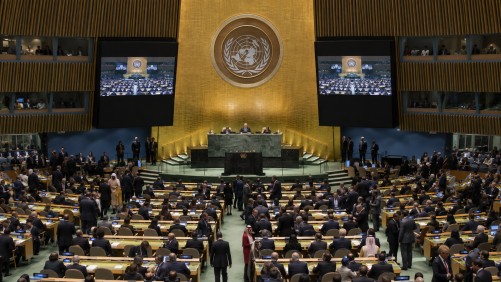
As global tensions simmer across various regions, nearly 130 world leaders have convened in New York for the United Nations General Assembly, where pressing issues such as the conflicts in the Middle East and Ukraine, as well as the rise of artificial intelligence, are set to dominate discussions. This gathering occurs amid increasing scrutiny of the existing international framework’s ability to address these complex challenges.
Central to the assembly’s agenda is the ongoing Russia-Ukraine conflict. French President Emmanuel Macron revealed that he has already discussed potential solutions with U.S. President Donald Trump, including a temporary halt to attacks on energy infrastructure in Ukraine. Macron emphasized the importance of bolstering Ukraine’s defensive capabilities and indicated plans to discuss these proposals further with Ukrainian President Volodymyr Zelenskyy.
In addition to European concerns, the conflict in Gaza and the pursuit of a two-state solution are expected to be significant topics of debate. Irish Prime Minister Micheál Martin is among those involved in discussions aimed at promoting a permanent ceasefire and advancing the prospects for peace between Israelis and Palestinians.
On another front, Iran’s participation in the assembly is led by Foreign Minister Abbas Araghchi, who aims to utilize this platform to assert Iran’s stance and defend its national interests. Although no formal meetings are currently scheduled, U.S. Secretary of State Marco Rubio has expressed Washington’s openness to engaging in dialogue with the Iranian delegation, reiterating that preventing Iran from acquiring nuclear weapons remains a key objective for the United States.
As these global leaders engage in high-stakes diplomacy, President Trump is also slated to hold meetings with British Prime Minister Andy Burnham and Japanese Prime Minister Sanae Takaichi, signaling the breadth of discussions that will take place during this pivotal international assembly.